The Weekend Proves for the Umpteenth Time Blerd Culture is International
MUSIC / ANIME / GAMING
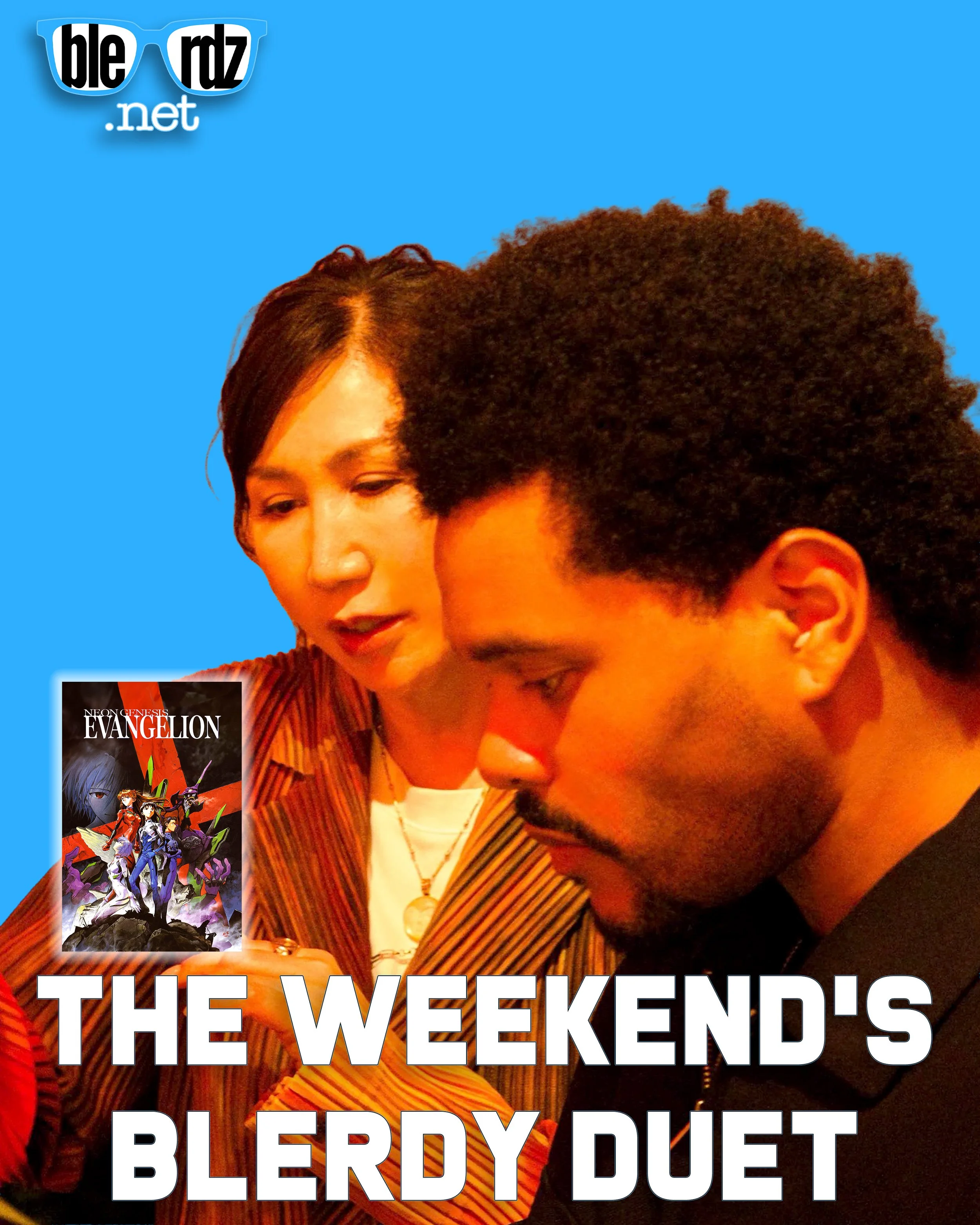
The Weeknd did not bring Neon Genesis Evangelion to a stadium because he needed to prove he knew anime. He brought it because anime, gaming and Black music already speak to the same enormous audience.
At Belluna Dome in Saitama on September 19, The Weekend, AKA Abel Tesfaye debuted an unreleased song built around Evangelion’s opening theme, “A Cruel Angel’s Thesis.” Yoko Takahashi, the singer whose voice made that opening unforgettable, joined him onstage. NieR creator Yoko Taro received credit for a visual presentation that brought Evangelion and NieR: Automata imagery into The Weeknd’s arena-sized world.
Some might consider that a niche-interest Easter egg hiding in the corner of a music video. In reality though, it is one of the world’s biggest R&B stars placing anime and gaming culture at the center of a stadium show, then trusting thousands of people to understand why the moment hits.
Watch The Weeknd’s official September 19 Reel
Blerd culture is not waiting outside the mainstream
Black fans have been building community around anime, comics and games for decades, even when the wider culture treated those interests as incompatible with Blackness. The Weeknd’s performance is another reminder that the supposed border between “urban” culture and nerd culture was always more marketing category than reality. The same people who grew up on R&B and rap also debated Dragon Ball power levels, copied fighting-game combos and knew an anime opening from its first few notes.
The difference now is visibility. Blerd culture no longer needs to be translated into something safer or less specific before it can reach a mass audience. A Japanese anime theme, a Canadian-Ethiopian superstar, a Japanese game director and a stadium full of fans can occupy the same stage without anybody stopping the show to explain the combination.
Pitchfork reports that the unreleased song samples “A Cruel Angel’s Thesis,” while The Weeknd’s own posts credit Yoko Takahashi and Yoko Taro. Takahashi was not reduced to an anonymous sample, and Taro’s visual language was not treated like generic cyberpunk wallpaper. Their presence made the collaboration feel less like fandom tourism and more like artists meeting in a shared cultural space.

Megan Thee Stallion has been telling us this
Megan Thee Stallion has spent years making the same case in full public view. In 2024, she presented Anime of the Year at the Crunchyroll Anime Awards in Tokyo while wearing a look inspired by Bruno Bucciarati from JoJo’s Bizarre Adventure. During that trip she also stepped out in a Satoru Gojo-inspired look from Jujutsu Kaisen. This was not a costume tossed onto an artist with no connection to the material; Megan has discussed discovering anime through InuYasha and pushed back against the idea that women—or women who look like her—must prove they belong in fandom.
Read Megan Thee Stallion’s conversation about anime’s mainstream rise
Then she put the references directly into the work. “Otaku Hot Girl,” from her album Megan, uses music from the Jujutsu Kaisen soundtrack and opens with narration from Adam McArthur, the English voice of Yuji Itadori. The song does not merely mention a popular title for quick credibility; its sound and character references assume anime fluency as part of the record’s vocabulary.
See Crunchyroll’s breakdown of “Otaku Hot Girl”
Her “BOA” video went even wider, constructing an arcade world from references to One Piece, Tekken, Mortal Kombat, Dance Dance Revolution, Space Channel 5 and Scott Pilgrim. Those influences were packaged inside a major-label-quality pop-rap visual built to travel across YouTube, social feeds and the Hot Girl Summer Tour conversation. Megan did not leave her nerd identity backstage to become mainstream. She made it part of the product.

Explore the anime and gaming references in Megan’s “BOA” video
The mainstream caught up to the group chat
That pattern should feel familiar. Black culture is often treated as specialized while it is being created, shared and refined inside Black communities. Once the language, style or sound proves irresistible, the rest of popular culture discovers that it has “crossed over.” Blerd culture is moving through the same cycle, except the evidence is now too large to hide behind the word niche.
The Weeknd can turn an Evangelion opening into a stadium event. Megan can move from a JoJo-inspired awards look to a Jujutsu Kaisen-infused album cut and a video-game universe without confusing her audience. Those moments work because millions of people already live at that intersection. The artists are not dragging fandom into the mainstream; they are showing the mainstream what its audience has looked like for years.
There are still details we do not know about The Weeknd’s song. His official posts do not provide a title, release date, album placement or full recording credits, so fan names such as “Tokyo” remain unofficial. None of that weakens what happened at Belluna Dome. The cultural statement arrived before the metadata: Blerd culture is not a side quest anymore. It is part of the main story, and the stadium already knew the words.The Weeknd did not bring Neon Genesis Evangelion to a stadium because he needed to prove he knew anime. He brought it because anime, gaming and Black music already speak to the same enormous audience. 👓